From October 7 to 11, 2026, the Belt and Road Initiative EMBA (BRI EMBA) program at Tsinghua University PBC School of Finance (Tsinghua PBCSF) successfully concluded its overseas module in Athens, Greece. Under the theme “Economic Development and Practice under the Belt and Road Initiative: Greece and the Global Financial System,” the module examined major issues shaping the global economy, including evolving geopolitical dynamics, regional trade and economic cooperation, and changes in the international monetary system.
As the School’s first overseas teaching module in Greece, the program marked an important milestone in its internationalization strategy. Bringing together distinguished speakers from government, business, and academia, the module combined keynote addresses and roundtable discussions, visits to leading companies, expert-led lectures, and intercultural activities. By connecting academic inquiry with firsthand industry experience, it offered participants an immersive, structured learning experience across borders—equipping them to assess global developments, think critically about emerging challenges, and identify new opportunities.
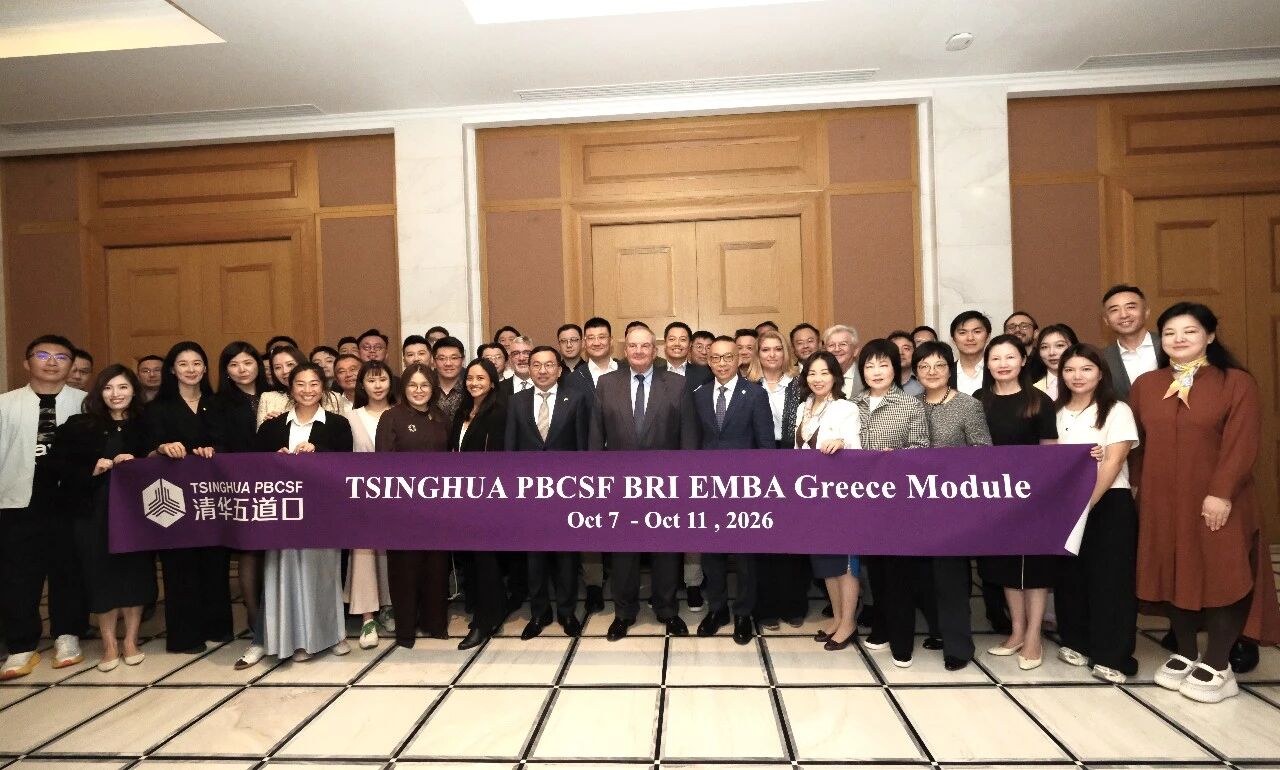
Photo: BRI EMBA faculty and participants at the module’s opening ceremony
Opening in Athens: Advancing Practical Cooperation between China, Greece, and Europe
The module opened with a formal ceremony, followed by a site visit to the Port of Piraeus. Former Greek Prime Minister Kostas Karamanlis delivered the keynote address, Chinese Ambassador to Greece Fang Qiu delivered the opening remarks, and Jiao Jie, Dean of Tsinghua PBCSF, addressed participants and joined a roundtable discussion.
Speakers explored China–Greece economic and trade relations and the evolving relationship between China and Europe, bringing together diverse perspectives on the challenges and opportunities for practical cooperation.
Following the ceremony, participants visited the Port of Piraeus. Qu Shengbin, Vice President and Deputy Chief Executive Officer of Piraeus Port Authority, introduced the port’s operations and shared insights into the achievements of China–Greece cooperation in shipping and port development. He also engaged directly with participants in an exchange of questions and ideas.
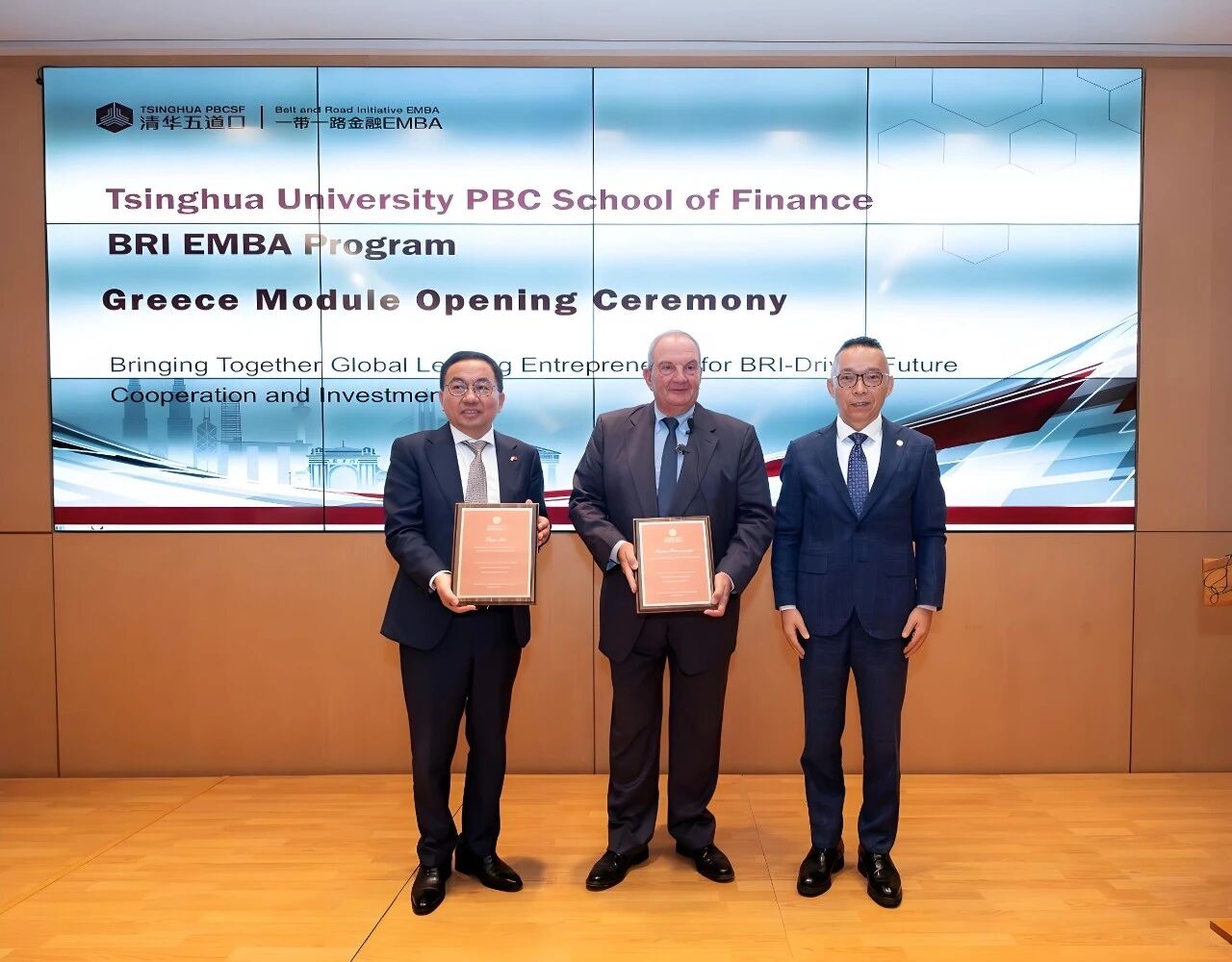
Photo: Jiao Jie with the keynote speakers
Expert Lectures and Corporate Visits: Bridging Theory and Business Practice
The Greece module featured a series of lectures by leading Greek academics and industry experts. Drawing on perspectives from geopolitics, business ethics, and investment strategy, the sessions examined both the opportunities and the challenges facing Greece and the broader Southern European market.
Pelagia Karpathiotaki, academic support professor for the module, led the introductory session, titled “The Port of Piraeus and the New Trade Geopolitics: Implications of BRI 2.0 for Global Managers.”
Port economics expert Christos Lampridis shared insights into ports, shipping, and trade. Professor of geopolitics Konstantinos Grivas examined Greece’s distinctive geopolitical position amid broader competition and cooperation between China and Europe.
Panagiotis Roumeliotis, Honorary Professor of International Political Economy, led a discussion titled “The European Union and China: Constructive Cooperation or Conflicting Interests?” Michalis Sallas, a former senior Greek government official, presented “Greece: A Gateway to the New Europe—A Strategic Guide to Business and Investment,” offering an in-depth look at the country’s business environment.
Dionysis G. Drosos, Professor Emeritus at Aristotle University of Thessaloniki, delivered a lecture titled “The Foundations of Business: From Greek Thought to Chinese Wisdom—Understanding What It Means to Do Business the Right Way.” Drawing on Eastern and Western intellectual traditions, the session explored the ethical foundations of business and responsible management.
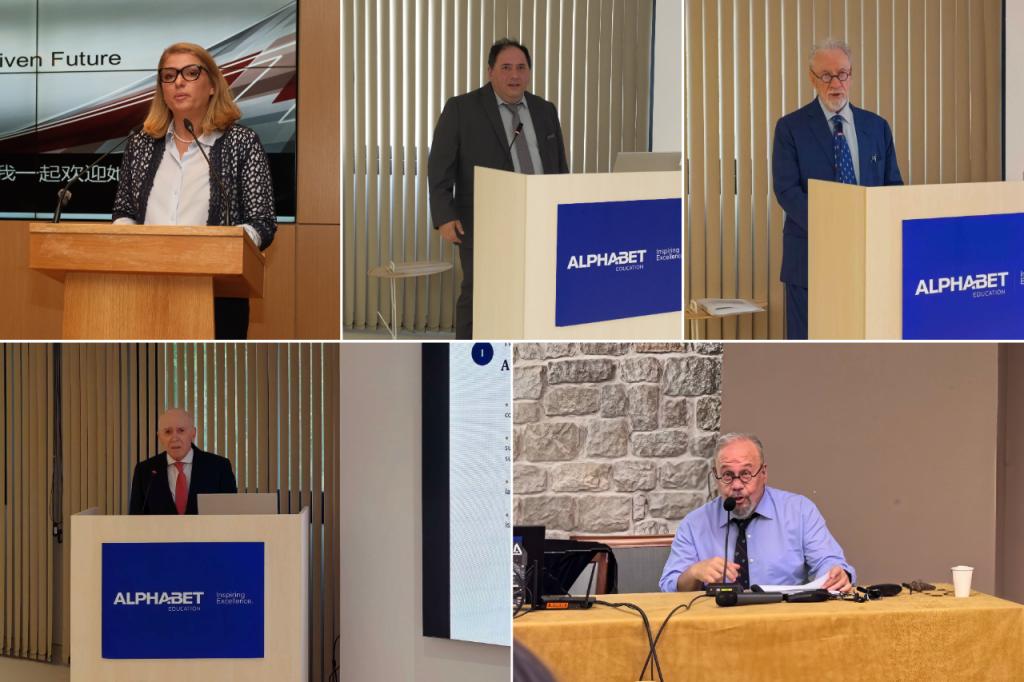
Photo: Pelagia Karpathiotaki (top left), Christos Lampridis (top), Michalis Sallas (top right), Panagiotis Roumeliotis (bottom left), and Dionysis G. Drosos (bottom right)
Corporate Visit: Exploring Metlen’s Global Strategy
Beyond theoretical coursework, our students visited METLEN, a leading global industrial and energy company, for an exchange and site tour. The in-depth discussion focused on METLEN’s business model, development strategy, and medium-to-long-term development goals. METLEN is a leading international industrial and energy company listed on the London Stock Exchange, with operations across more than 40 countries worldwide covering three major segments: energy, metals, and infrastructure. The group is currently pursuing the next phase of its strategic growth and international expansion.
In the energy sector, METLEN runs integrated utility operations alongside a global energy transition platform, with green assets including solar PV, energy storage, wind power and data centers in multiple countries. Its metals division owns a fully vertically integrated aluminium value chain within the EU. Leveraging proprietary technologies, the company also develops critical rare metals and expands specialty metals businesses relevant to national defence. The infrastructure arm concentrates on the South-Eastern Mediterranean region, investing in large-scale concession projects such as ports, highways, and railways.
During the Q&A session, our students held extensive conversations with METLEN management covering supply chain layout, China market strategy, project financing plans, business positioning, valuation, and dividend policies, as well as the cost competitiveness of Europe’s aluminium industry. METLEN representatives shared updates on their China supply chain procurement and regional market footprint, explained the synergies between utility and project development activities, and outlined measures to address cost pressures facing European domestic industries.
This site visit and discussion offered our students first-hand insights into the operations and industrial trajectory of this leading local firm, bridging academic learning with real-world industrial practice.
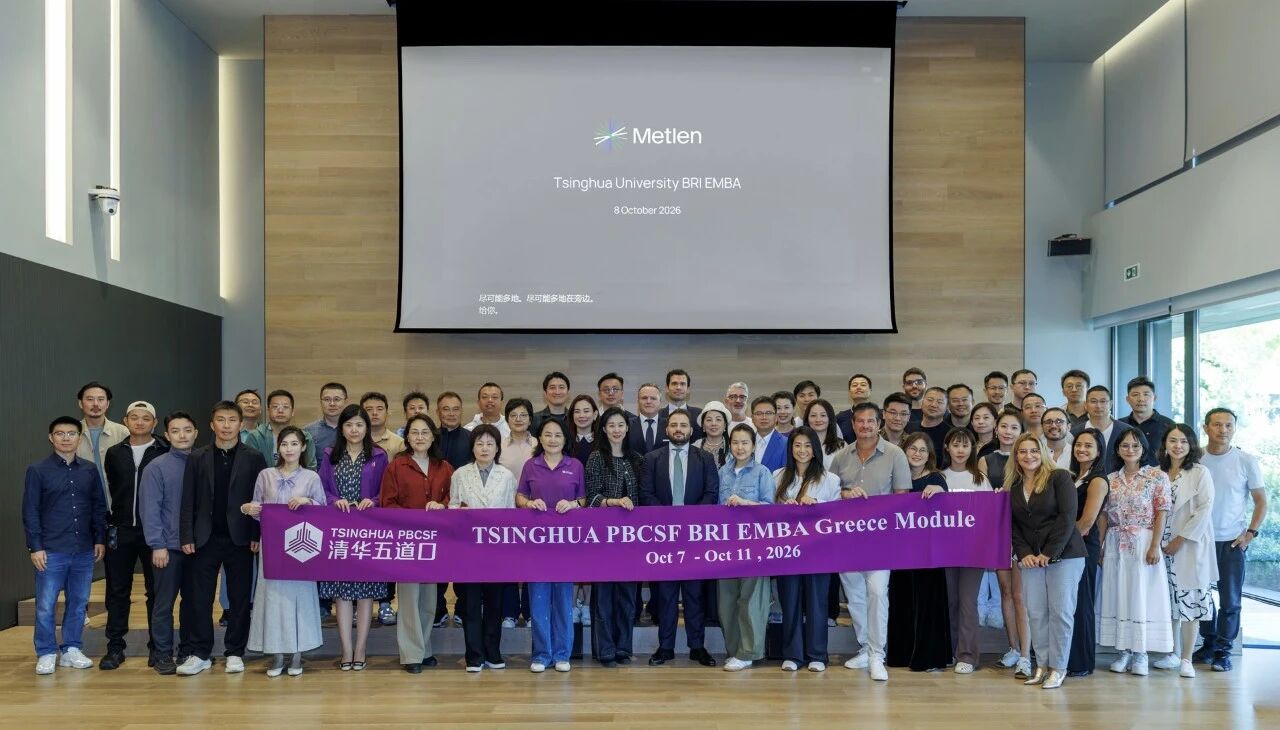
Photo: BRI EMBA participants at METLEN
In-Depth Discussions: Reshaping the Global Monetary Order and the AI-Driven Economy
Miao Yanliang, Senior Managing Director and Chief Strategist at China International Capital Corporation Limited (CICC), delivered two core lectures on the changing international monetary order and renminbi internationalization, and the economic and market implications of the AI revolution. Drawing on recent research and data, he presented a structured analysis of these issues and prompted lively discussion among participants.
Renminbi Internationalization and the Evolving Global Monetary System
Miao began with the three core functions of an international currency: store of value, medium of exchange, and unit of account. He reviewed the renminbi’s internationalization over more than two decades, using recent data on global foreign-exchange reserves, cross-border trade settlement, and investment and financing flows to assess progress and remaining challenges.
He identified four external factors creating opportunities for the renminbi: changes in confidence in the US dollar-centered monetary system, China’s enduring strengths in manufacturing, the restructuring of global trade, and the rapid evolution of digital payment ecosystems.
Drawing lessons from the historical development of major international currencies, Miao outlined five dimensions for advancing renminbi internationalization: the exchange-rate regime, the supply of renminbi-denominated assets, trade settlement, the renminbi’s role as a pricing currency, and coordination between onshore and offshore markets.
His central message was that an international currency’s standing ultimately rests on strong institutions and sustained market confidence.
AI, Macroeconomic Change, and Financial Markets
In his second lecture, Miao compared the AI revolution with previous waves of technological change. He highlighted AI’s rapid diffusion, its reach into high-skilled occupations, and its broad range of applications. In his analysis, AI is not only a general-purpose technology capable of raising productivity, but also a foundational force for generating new knowledge and innovation.
He examined the potential J-curve effect of AI adoption on economic growth, as well as its differing short- and long-term implications for employment structures and inflation. He also discussed a potential reversal of the Balassa–Samuelson effect: by raising productivity in non-tradable sectors, AI could help moderate pressures for currency appreciation.
Turning to investment practice, Miao explored structural changes in four relationships in the AI era: equities and exchange rates, valuations and interest rates, market leaders and the broader market, and corporate profits and employee compensation. He connected these shifts to asset-allocation frameworks and discussed how sector positioning may vary across different stages of the economic cycle.
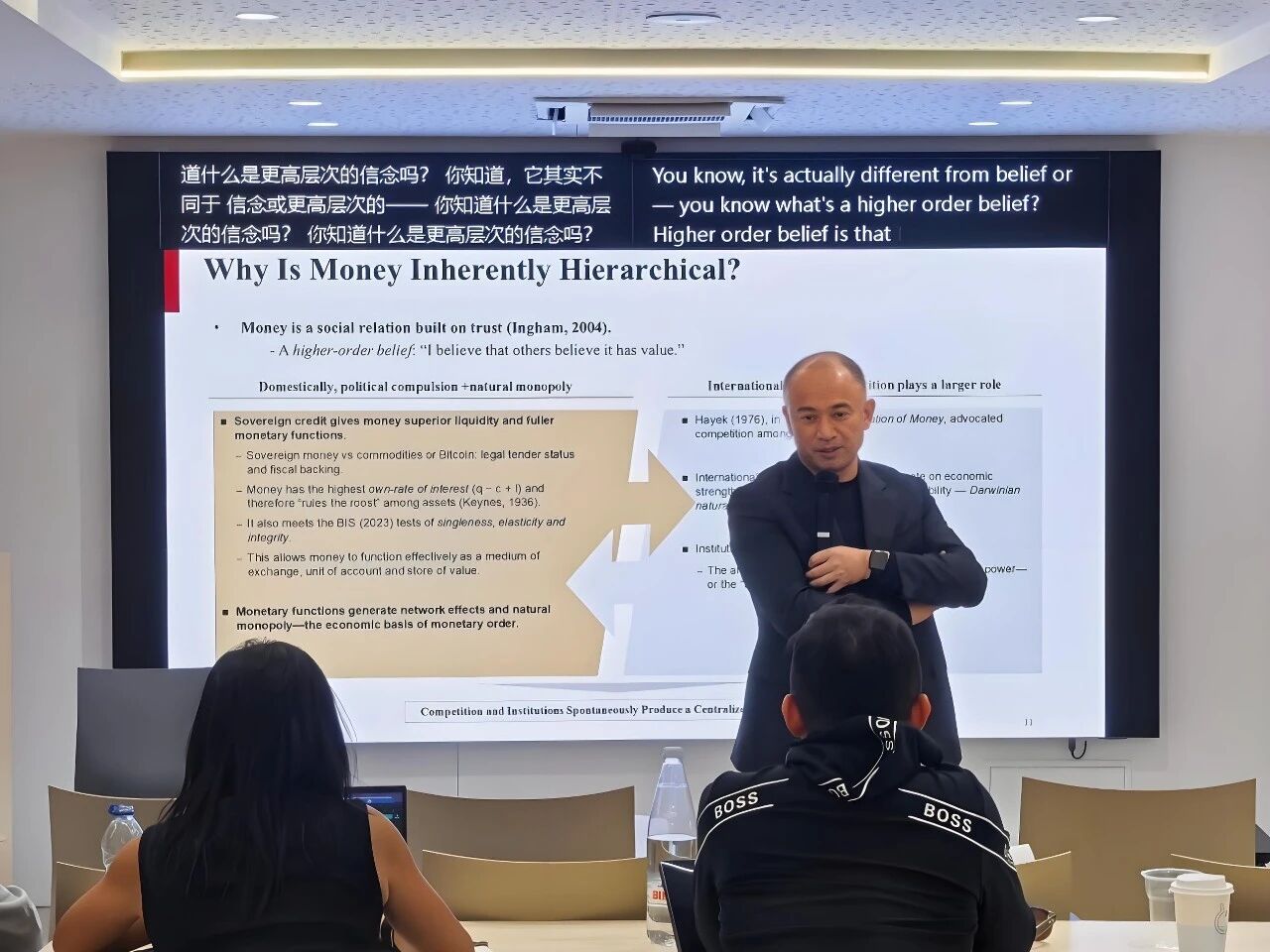
Photo: Miao Yanliang delivering his lecture
Cross-Cultural Dialogue: Broadening BRI EMBA’s Global Perspective
Alongside academic sessions and corporate visits, the module featured a range of cultural activities designed to deepen participants’ understanding of Greece and its history.
A Greek cultural evening by the Aegean Sea offered participants an opportunity to experience local traditions amid the country’s distinctive coastal and mountainous landscape. A Sparta-themed interactive activity brought ancient Greek history to life, while a full-day visit to historic landmarks toward the end of the module provided a closer encounter with the heritage of Greek civilization.
At a class networking session, participants from around the world introduced themselves in a wide range of languages and dialects, including English, Portuguese, Spanish, Malay, Indonesian, Persian, Cantonese, Shanghainese, and Teochew. The diversity of linguistic and cultural backgrounds reflected the international character of the BRI EMBA community.
An AI-powered simultaneous interpretation system enabled participants to communicate across multiple languages and dialects in real time. The technology helped facilitate inclusive, efficient cross-cultural dialogue while offering a practical demonstration of how AI can support international business communication.
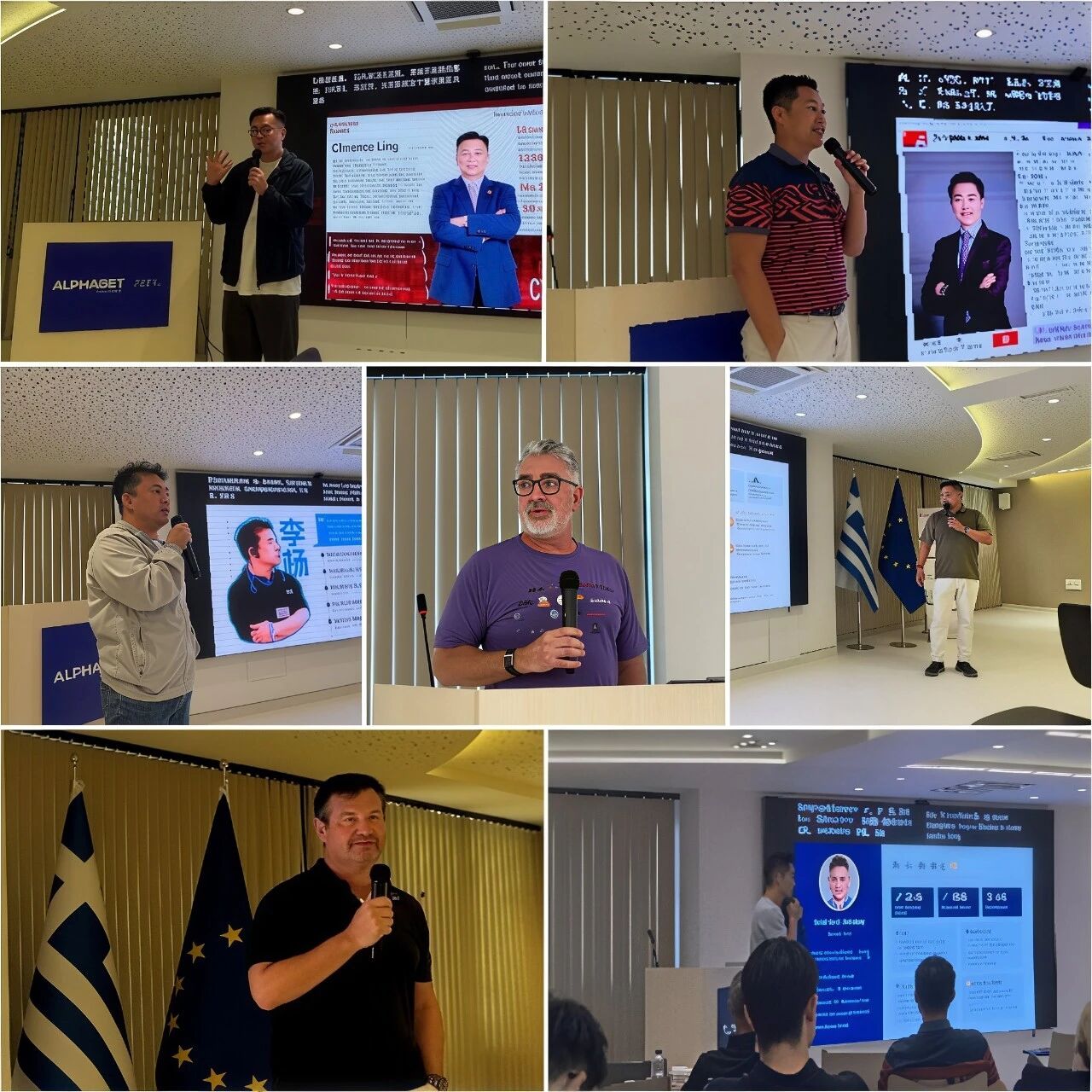
Photo: BRI EMBA participants at the Greece module’s class networking session
Expanding the Global Teaching Network and Deepening Belt and Road Talent Development
As a key gateway connecting China with Europe under the Belt and Road Initiative, Greece offers an important setting for international business education and cross-border engagement. The Greece module served not only as an opportunity for advanced study, but also as a platform for dialogue between Chinese and Greek business communities.
Tsinghua PBCSF will continue to expand its overseas teaching activities in key Belt and Road markets, giving participants more opportunities to develop a global outlook and identify cross-border business opportunities.
As an integral part of the BRI EMBA program’s global teaching network, the Greece module brought together perspectives from government, business, and academia, connecting theoretical inquiry with industry practice and encouraging dialogue between Eastern and Western traditions of thought.
Looking ahead, Tsinghua PBCSF will continue to develop high-quality overseas modules and strengthen its global platform for business education and international exchange.
Scan the QR code below to inquire about BRI EMBA Program Admissions: