Marking the 20th anniversary of the establishment of the China-Greece Comprehensive Strategic Partnership and the 10th anniversary of the Tsinghua University PBC School of Finance Belt and Road Initiative EMBA (BRI EMBA) program, Jiao Jie, Dean of Tsinghua PBCSF, led a delegation to Athens, Greece, for a five-day academic module.
The first-ever Greece module organized by Tsinghua PBCSF marks an important milestone in the School’s international engagement and further expands the BRI EMBA program’s global learning platform. More than 70 entrepreneurs and business leaders from the program’s international community gathered in Athens for an in-depth exchange between two of the world’s great ancient civilizations.
The opening ceremony took place on the morning of October 7, 2026, at the conference hall of the Bodossaki Foundation in Athens. Hosted by Pelagia Karpathiotaki, academic advisor for the BRI EMBA Greece module, the ceremony featured keynote addresses and a roundtable discussion with Kostas Karamanlis, former Prime Minister of Greece; Fang Qiu, Chinese Ambassador to Greece; and Jiao Jie, Dean of Tsinghua PBCSF.
Karamanlis served as Prime Minister of Greece from 2004 to 2009 and was both a participant in and a witness to the signing of the China-Greece Comprehensive Strategic Partnership agreement in 2006. Over the past two decades, he has continued to support friendly exchanges between the two countries, helping lay a strong foundation for cooperation in trade, shipping, and cultural exchange.
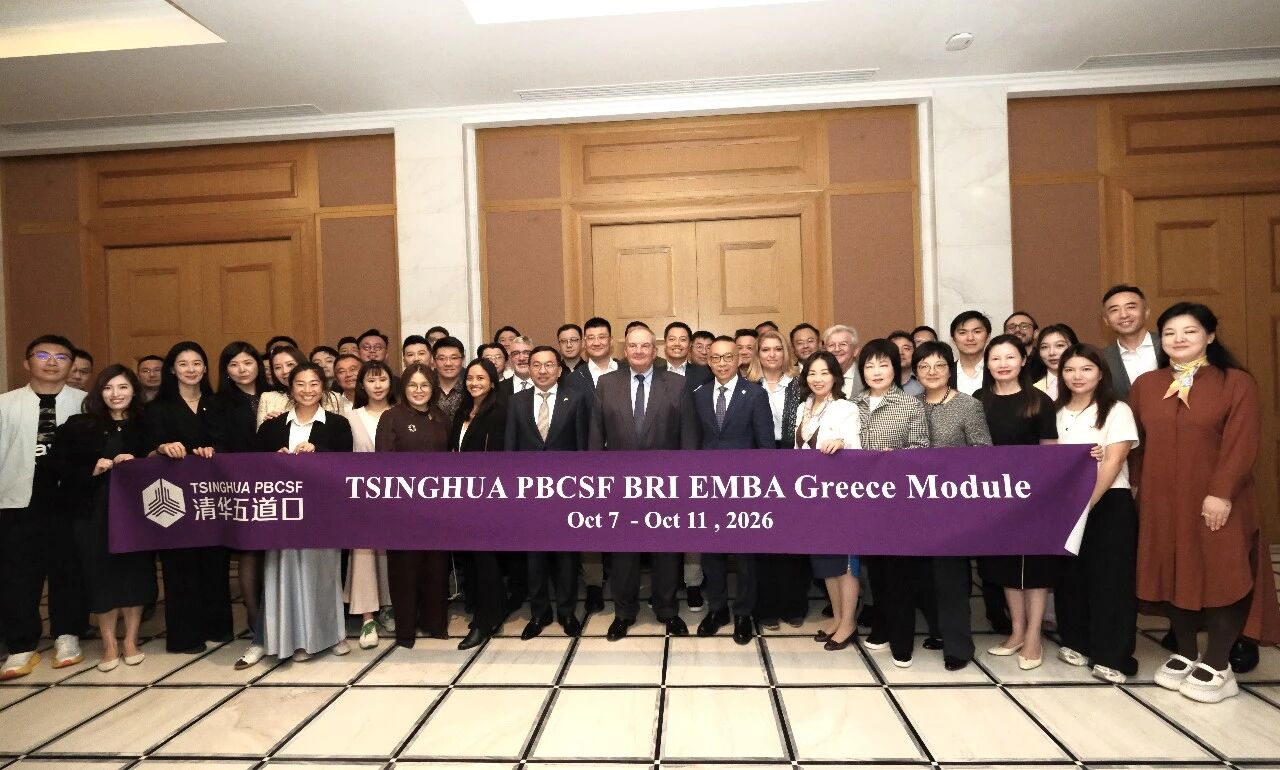
BRI EMBA Greece Module opening ceremony
Kostas Karamanlis: Building a Shared Future Through Civilizational Exchange
In his keynote address, Kostas Karamanlis reflected on the milestones that shaped the China-Greece Comprehensive Strategic Partnership. He described its establishment in 2006 as a landmark in the history of bilateral relations.
Karamanlis highlighted Greece’s global standing in shipping. Greek shipowners account for approximately one-fifth of global shipping capacity and around 60% of the European Union’s total tonnage. Meanwhile, the Port of Piraeus has developed into a major maritime hub for the Mediterranean and Europe, serving as a leading example of practical China-Greece cooperation.
He also traced the many connections between the two countries, from their shared Olympic heritage and cultural affinities to tangible achievements in trade and investment. Cooperation now spans port logistics, agriculture, tourism, technology, and other sectors.
Against the backdrop of an increasingly complex international environment, Karamanlis observed that the world is moving toward a more multipolar order and called on countries to overcome divisions and strengthen connectivity and cooperation.
Drawing on the philosophical traditions of both civilizations, he reflected on the common ground between Socrates and Confucius, emphasizing the potential for different cultures to coexist, learn from one another, and flourish together.
He also recalled his first visit to China in 1979, when he witnessed the country’s remarkable transformation through reform and opening-up. He reaffirmed the enduring strategic value of the friendship between Greece and China.
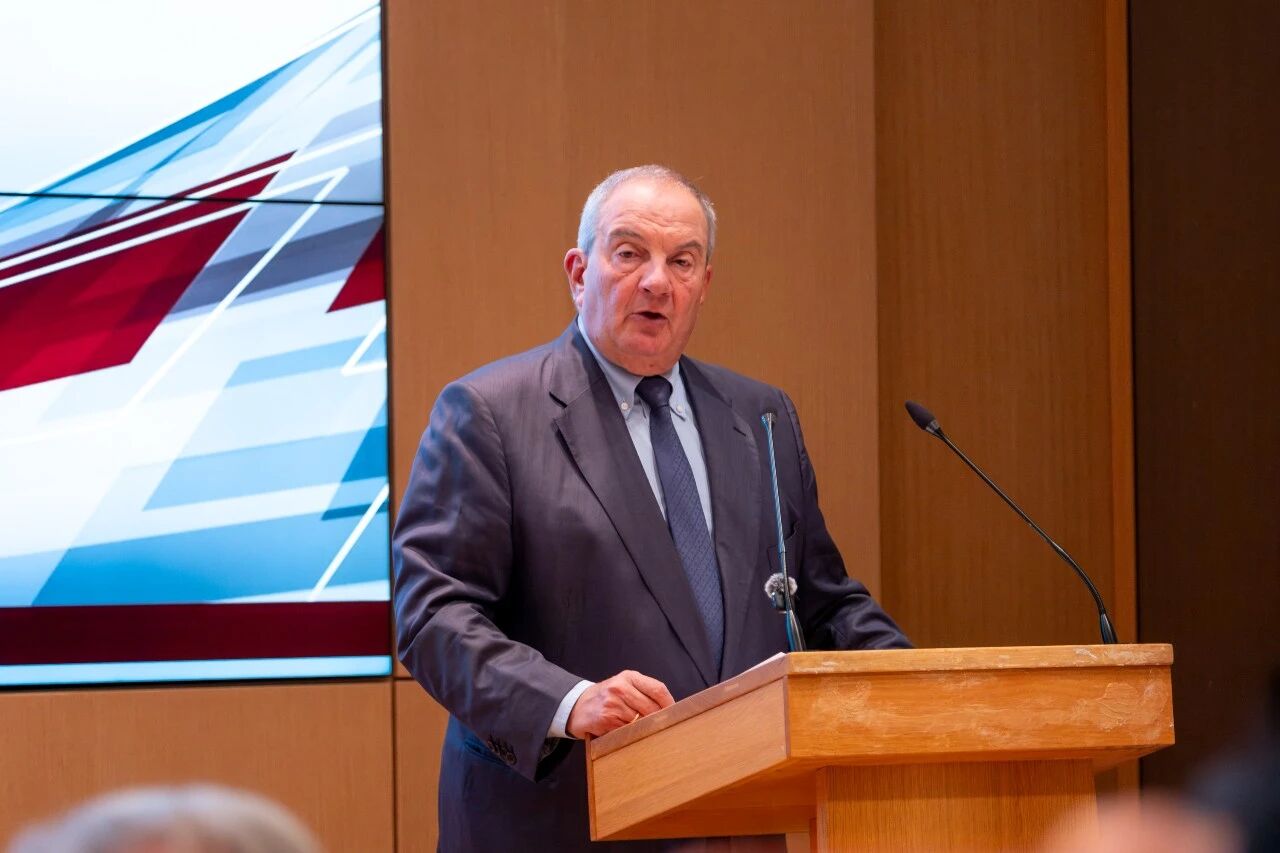
Former Greek Prime Minister Kostas Karamanlis
Fang Qiu: Finding Common Ground Between Civilizations and Building Lasting Partnerships
In his address, Fang Qiu, Chinese Ambassador to Greece, opened with a quotation from an ancient Greek philosopher. He emphasized that experience and travel are among the most valuable forms of education, encouraging the entrepreneurs present to draw on their time in Greece to better understand European markets, identify cross-border opportunities, and deepen international cooperation.
He examined China-Greece relations through four interconnected dimensions: civilizational affinity, longstanding friendship, emerging opportunities, and a shared long-term outlook.
As two countries with ancient civilizations, China and Greece share values that include harmony, inclusiveness, respect for commitments, and a strong sense of responsibility. Despite the geographical distance between them, these common foundations provide a natural basis for mutual understanding and cooperation.
Fang recalled the friendship the two countries have demonstrated in times of difficulty. Greece has repeatedly provided assistance to Chinese nationals during overseas evacuations, while China’s support for the Port of Piraeus has helped transform it into a key hub in China-Europe supply chains.
Today, Greece benefits from its strategic location at the crossroads of Europe, Asia, and Africa. Its land-sea transport connections provide access to markets across Central and Eastern Europe, while Chinese companies including Huawei, Gree, and Haier have established and expanded their presence in the country.
Fang emphasized the strong complementarity between Chinese and Greek industries and highlighted significant potential for cooperation in clean energy, new-energy transportation, agricultural products, and high-end stone materials.
Concluding with Aristotle’s idea that a true friend is “one soul dwelling in two bodies,” he encouraged students to build lasting partnerships by drawing strength from mutual understanding between civilizations and translating that understanding into practical cooperation.
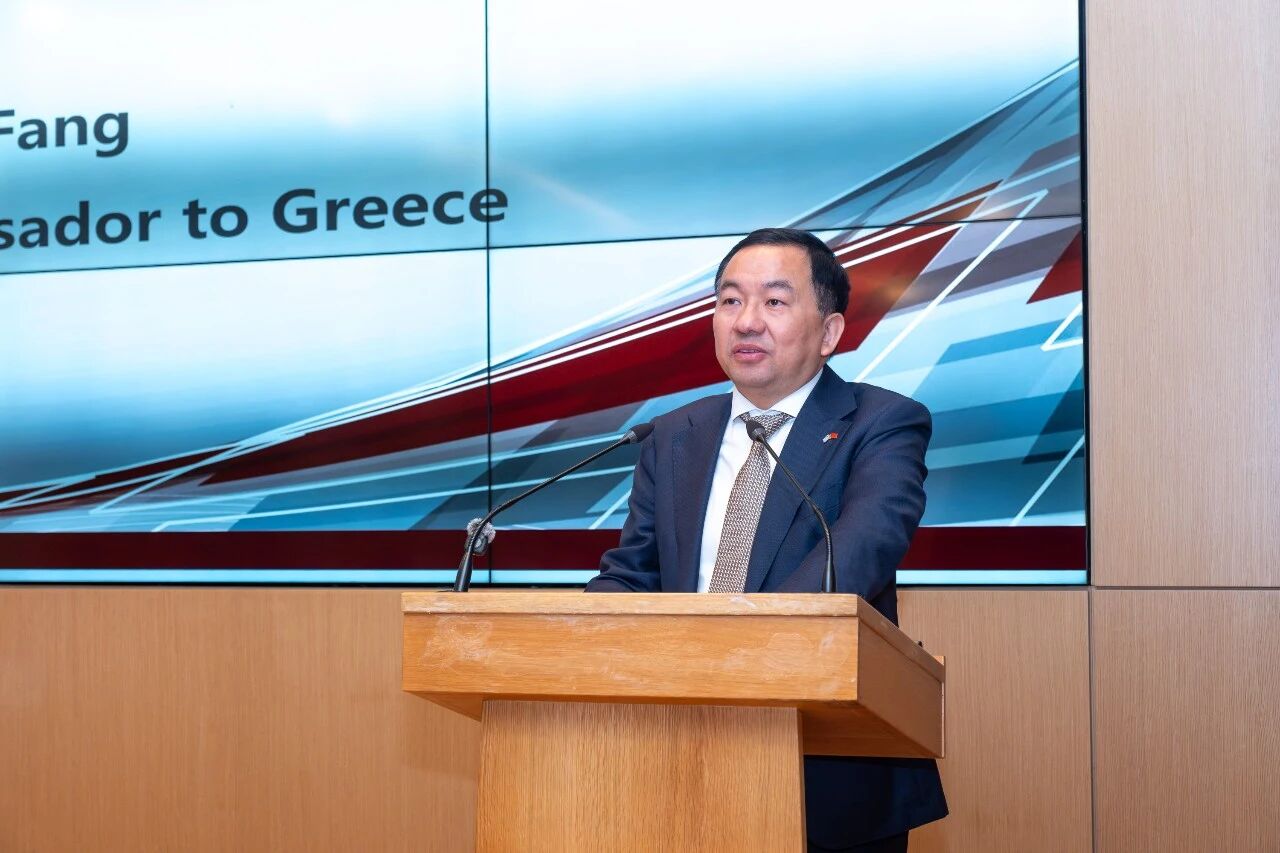
Fang Qiu, Chinese Ambassador to Greece
Jiao Jie: Bridging Civilizations Across Continents, Embracing a Long-Term Perspective
On behalf of Tsinghua PBCSF, Dean Jiao Jie expressed his sincere appreciation to the ambassador, the former prime minister, and all distinguished guests for their participation, and formally declared the BRI EMBA Greece module open.
Tracing its roots to the Graduate School of the People’s Bank of China, Tsinghua PBCSF has earned a reputation as a leading institution for financial education and talent development in China. Drawing on Tsinghua University’s multidisciplinary strengths, the School has long been committed to advancing financial reform in China, developing outstanding financial leaders, and building a world-class platform for financial education and policy research.
As the BRI EMBA program approaches its tenth anniversary, it has educated nearly 300 business leaders and entrepreneurs. Its students are experienced executives and decision-makers from around the world, representing industries including finance, energy, logistics, and the digital economy.
The program distinguishes itself through its integration of finance and industry and its commitment to experiential learning on a global scale. Its philosophy of “taking the classroom around the world” is reflected in overseas modules regularly held in Belt and Road countries, where students visit landmark projects, engage with local businesses and government institutions, and gain first-hand insight into regional markets.
Jiao noted that the Greece module carries particular significance, coinciding with three important milestones: the 20th anniversary of the China-Greece Comprehensive Strategic Partnership, the 45th anniversary of Tsinghua PBCSF, and the tenth anniversary of the BRI EMBA program.
Twenty years ago, former Prime Minister Kostas Karamanlis advocated deeper cooperation between Greece, a global maritime power, and China in shipping and port development. He also called for closer educational and cultural exchanges between the two countries, both heirs to ancient civilizations.
Two decades later, both visions have become reality. The Port of Piraeus has emerged as a flagship project of China-Greece cooperation under the Belt and Road Initiative, while the BRI EMBA Greece module represents a new chapter in educational exchange and people-to-people engagement between the two countries.
Drawing on his own professional experience, Jiao shared the story of cooperation and development at the Port of Piraeus, underscoring the strategic importance of China-Greece collaboration in shipping, trade, and investment.
He encouraged students to see the Greece experience as more than an opportunity to broaden their international outlook and gain industry insights. It was also an opportunity to reflect on the resilience, historical depth, and long-term perspective embodied by two great civilizations.
Jiao expressed his hope that the module would create new bridges for educational exchange, cultural understanding, and economic cooperation between China and Greece.
More than 2,500 years ago, Confucius expressed the joy of welcoming friends from afar, while Socrates explored questions of virtue and justice in the streets and public spaces of Athens. Today, their intellectual descendants are gathered to discuss finance, trade, and shipping, bringing the dialogue between these civilizations into the present.
Greece is not only a country of extraordinary historical significance, but also one with considerable economic potential. It serves as a gateway to Southern Europe, a major center of global shipping, and an important hub for the blue economy.
During the remainder of the module, students will visit the Port of Piraeus to study port economics and maritime policy, engage in substantive dialogue with representatives from Greek government, business, and academia, and connect classroom learning with the realities of the global economy.
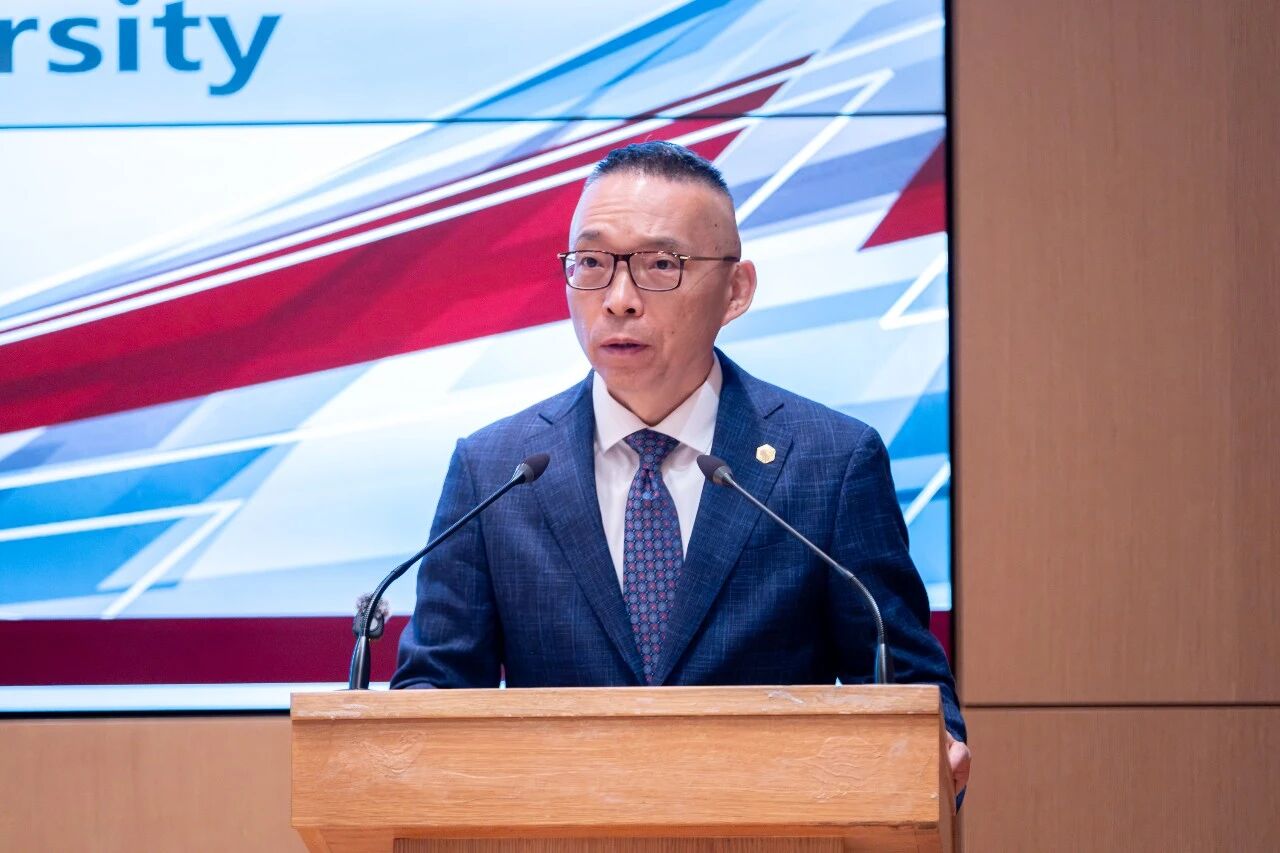
Dean Jiao Jie
Roundtable Dialogue: Understanding the Global Landscape and Advancing International Business
The opening ceremony concluded with a lively roundtable discussion between Dean Jiao Jie and former Greek Prime Minister Kostas Karamanlis, covering the international geopolitical landscape, Europe’s development, and the global expansion of Chinese enterprises.
Discussing the strategic priorities and capabilities required for Chinese companies expanding internationally, Jiao observed that globalization has become an essential strategic path for Chinese enterprises.
An increasing number of companies founded or led by Tsinghua PBCSF alumni are accelerating their international expansion. To succeed, Jiao emphasized, businesses must develop a deep understanding of local market needs, strengthen financial and risk-management capabilities, and position themselves strategically within global value chains.
Equally important is a commitment to corporate social responsibility. Companies must establish genuine roots in their host markets, integrate into local communities, and operate as responsible global corporate citizens.
Karamanlis offered his perspective on Europe’s position in the international system. The European Union possesses substantial economic resources and world-class strengths in science, education, and culture. However, he argued that a prolonged lack of political leadership has constrained the pace of European integration.
He expressed hope that Europe would renew its strategic direction, strengthen its collective resolve, and assume greater responsibility on the global stage—becoming a stronger force for peace, cooperation, and shared development.
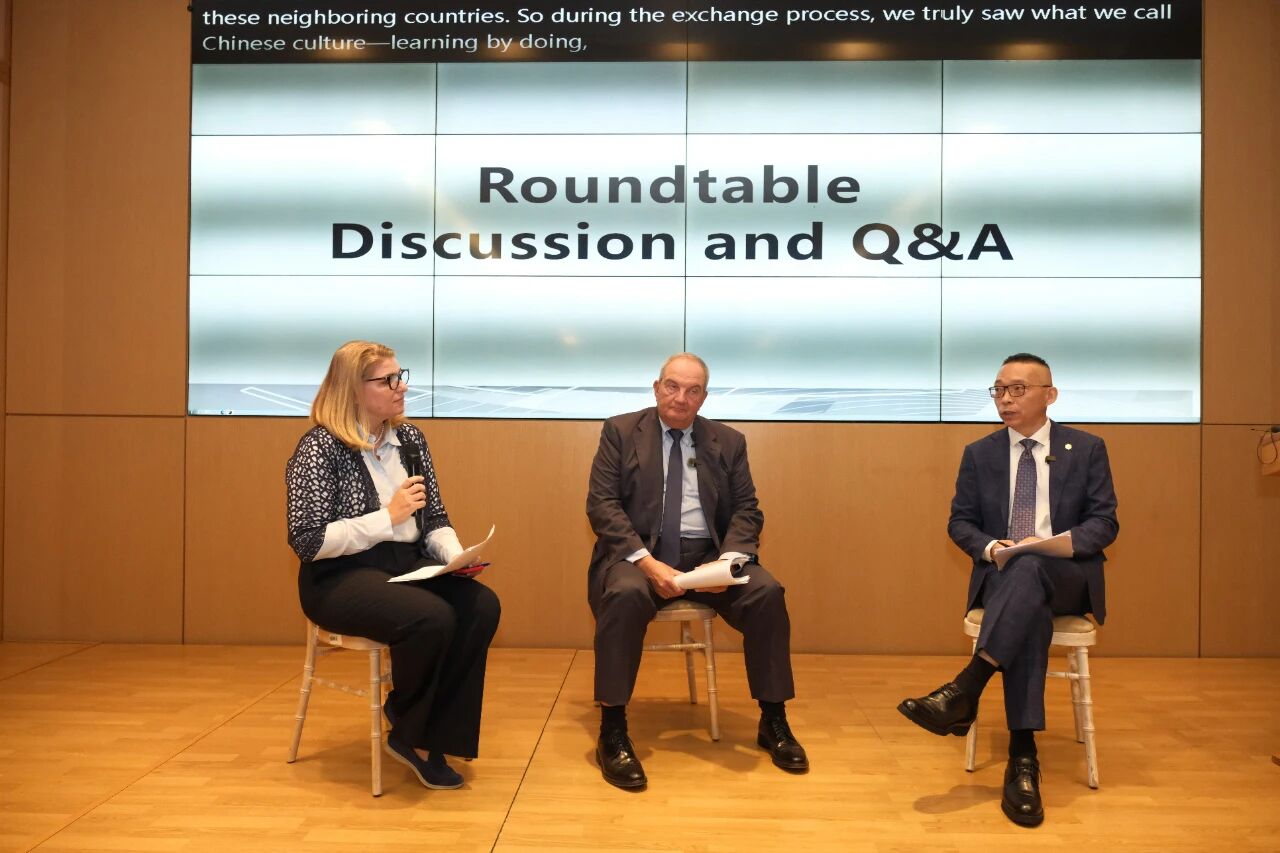
Dean Jiao Jie and former Greek Prime Minister Kostas Karamanlis during the roundtable discussion
From Tsinghua PBCSF’s campus in Beijing to the shores of the Aegean, Chinese and Greek civilizations are once again coming together across millennia of history. A new dialogue—bringing together ideas, economic cooperation, and cultural understanding—is taking shape.
From October 7 to 11, BRI EMBA students will participate in five days of immersive study, site visits, and cross-border engagement in Greece. Building on the 20th anniversary of the China-Greece Comprehensive Strategic Partnership, they will explore emerging opportunities in cross-border finance, maritime trade, shipping, and new-energy industries under the Belt and Road Initiative.
Between mountains and seas, students will draw on the wisdom of two ancient civilizations while strengthening the knowledge, connections, and global perspective needed to navigate the opportunities of tomorrow.
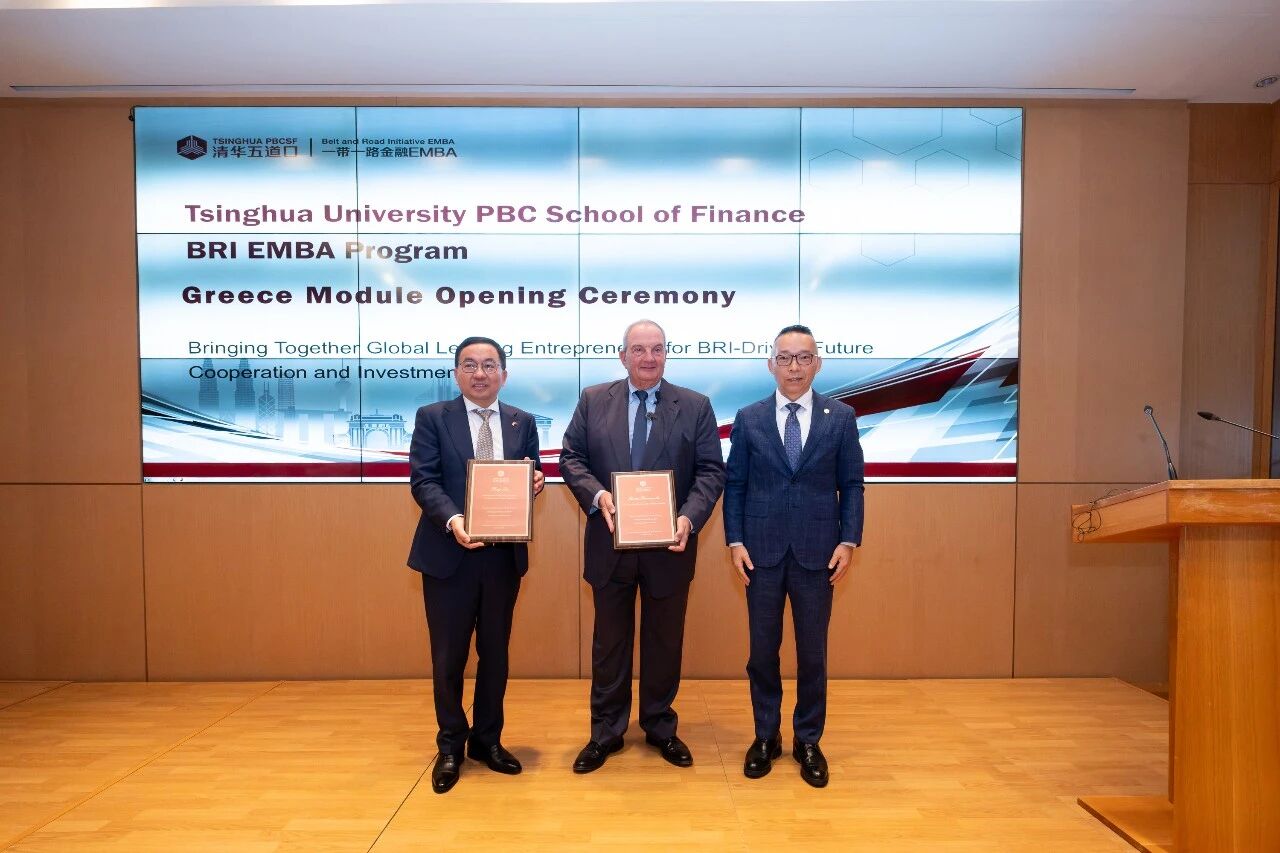
Dean Jiao Jie with the keynote speakers
Scan the QR code below to inquire about BRI EMBA Program Admissions: