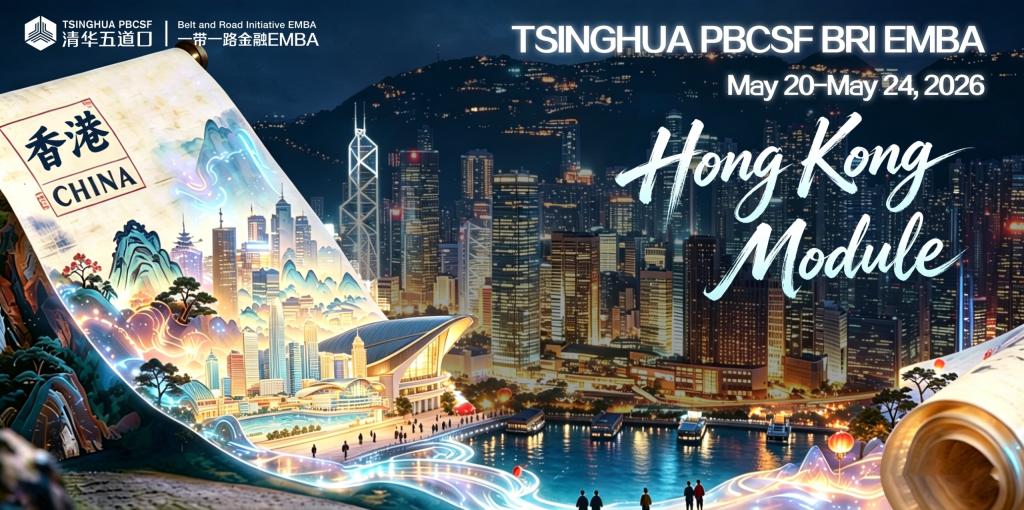
From May 20 to 24, 2026, students from Cohorts 6 and 7 of the Tsinghua University PBC School of Finance Belt and Road Initiative EMBA (BRI EMBA) program gathered in Hong Kong for an intensive five-day academic module.
The program combined rigorous classroom learning in financial law and international affairs with visits to major financial institutions and government bodies, offering students a multidimensional perspective on Hong Kong’s distinctive role as a bridge between Mainland China and global markets.
Against the backdrop of Victoria Harbour, Victoria Peak, and the West Kowloon Cultural District, students explored how Hong Kong’s institutional framework, international connectivity, and deep financial markets continue to shape its role as a “super connector.”
The module brought together entrepreneurs and executives from around the world for academic study, institutional visits, government-business dialogue, alumni engagement, and cultural experiences. Through classroom discussion, students broadened their understanding of the global business environment; through first-hand visits, they examined shifts in financial markets and industry; and through alumni and cultural activities, they strengthened the connections that define the BRI EMBA community.
Together, these experiences provided a closer look at the opportunities associated with Hong Kong’s position within China’s continued opening-up and the evolving landscape of Belt and Road cooperation.
In the Classroom: Building the Legal and Strategic Foundations for Global Business
Throughout the module, academic insight and practical experience came together in a series of courses designed to address the legal, financial, and geopolitical challenges facing internationally active businesses.
Financial Law: Understanding the Institutional Foundations of Cross-Border Finance
Professor Robin Hui Huang of the Faculty of Law at The Chinese University of Hong Kong delivered the two-day core course Financial Law.
Drawing on his expertise in financial regulation and corporate governance, Professor Huang traced the evolution of global financial regulatory systems before examining the institutional characteristics of Hong Kong as a common-law jurisdiction.
The course addressed a range of issues directly relevant to companies operating across borders, including cross-border investment and financing compliance, corporate governance for listed companies, and investor protection.
Using real-world cross-border commercial cases, Professor Huang explored how Hong Kong’s legal and regulatory framework supports international capital flows and financial-market activity. Students examined how differences in legal systems, regulatory requirements, and governance structures can affect corporate decision-making when companies expand internationally.
The course also provided practical perspectives on strengthening compliance frameworks and managing financial and legal risk in cross-border operations.
Classroom discussion was highly interactive. Drawing on challenges they had encountered in their own companies’ international expansion, students engaged Professor Huang in detailed discussions and explored potential approaches to real-world business and regulatory issues.
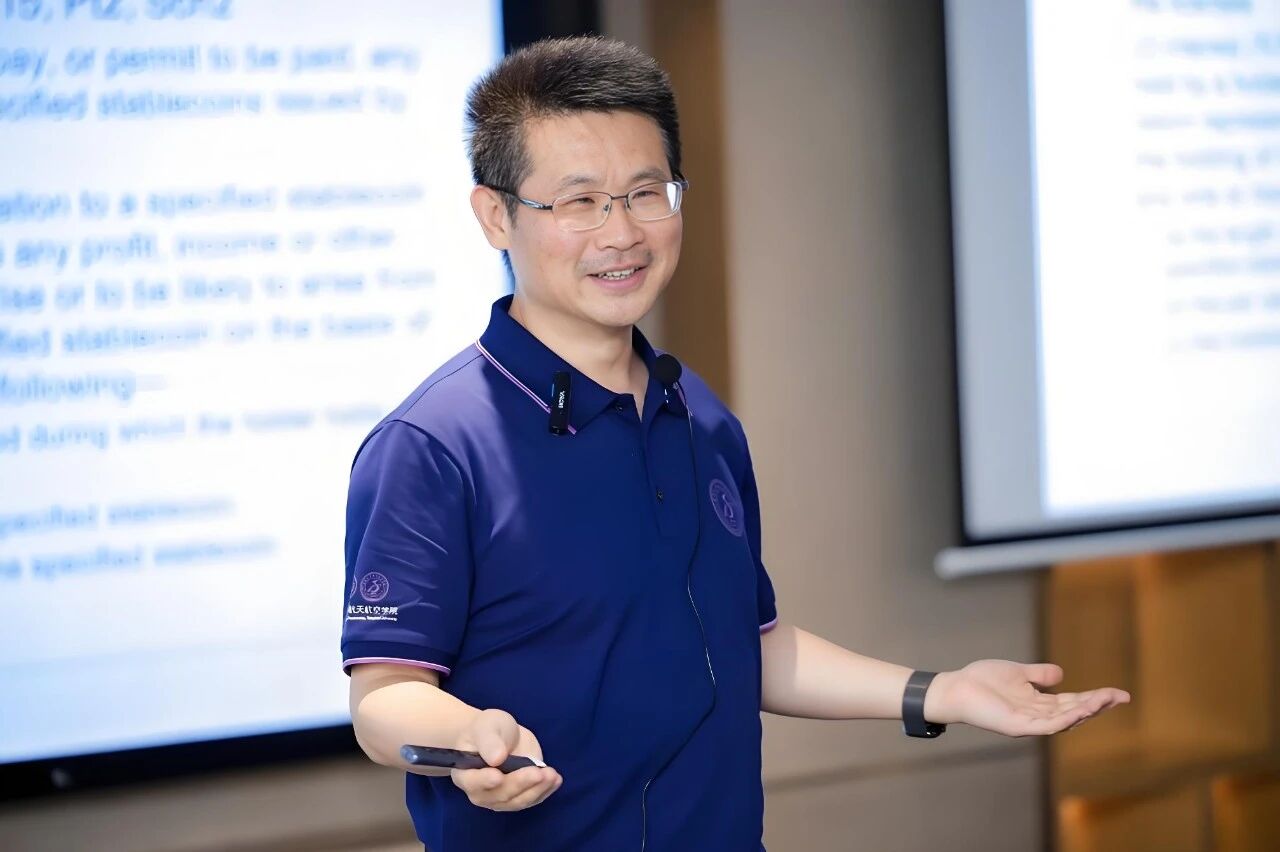
Professor Robin Hui Huang
International Relations: Understanding Geopolitics and China’s External Environment
Professor Chu Shulong of Tsinghua University’s School of Public Policy and Management delivered a special course on China-U.S. Relations, China-Japan Relations, and Chinese Foreign Policy.
Taking a broad historical perspective, Professor Chu reviewed the evolution of China’s relationships with the United States, Japan, and other major powers, while examining the principles and priorities that have shaped China’s foreign policy.
He discussed China’s emphasis on peaceful development and the concept of building a community with a shared future, while placing these ideas within the wider evolution of the international system.
The course also examined geopolitical risks and areas of potential cooperation in the context of the Belt and Road Initiative and a rapidly changing global environment.
For business leaders, the discussion highlighted the importance of understanding the interaction between geopolitics, national policy, global markets, and corporate strategy.
Students were encouraged to consider their companies’ international development from a broader strategic perspective and to strengthen their ability to make informed decisions amid increasingly complex geopolitical conditions.
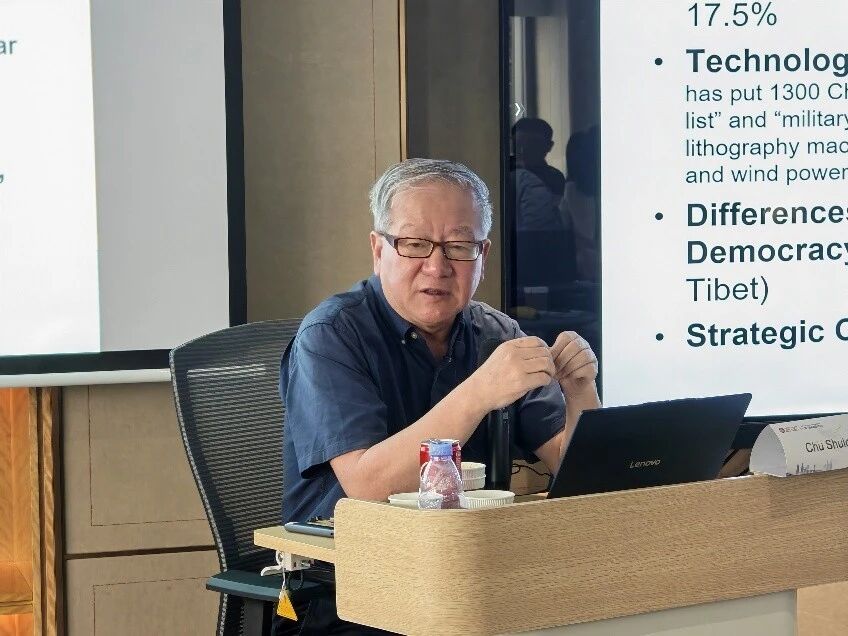
Professor Chu Shulong
Government-Business Dialogue: Inside Hong Kong’s Institutions
A highlight of the Hong Kong module was a visit to the Legislative Council of the Hong Kong Special Administrative Region, where students gained first-hand insight into Hong Kong’s political and institutional framework under “One Country, Two Systems.”
At the Legislative Council Complex, the delegation visited the Chamber and learned more about the operation of the legislature and the governance structure of the Hong Kong SAR.
The visit was followed by an entrepreneurial dialogue with the Hon Andrew Yao Cho-fai, Member of the Legislative Council and Chairman of the Council of Lingnan University.
Yao discussed Hong Kong’s role within China’s broader development, its participation in the Guangdong-Hong Kong-Macao Greater Bay Area, and its engagement with Belt and Road markets.
He also introduced recent initiatives related to attracting international talent, strengthening Hong Kong’s business environment, and supporting industrial development and economic upgrading.
During their time in Hong Kong, students also met with representatives of the Belt and Road Office under the Commerce and Economic Development Bureau of the Hong Kong SAR Government.
The discussions offered students a closer view of Hong Kong’s role as an international gateway and its function in connecting companies, capital, professional services, and markets across Mainland China, Asia, and the wider world.
Taken together, these exchanges provided a more comprehensive understanding of Hong Kong’s institutional environment, governance framework, and development priorities, while helping students identify opportunities associated with the Greater Bay Area and international markets.
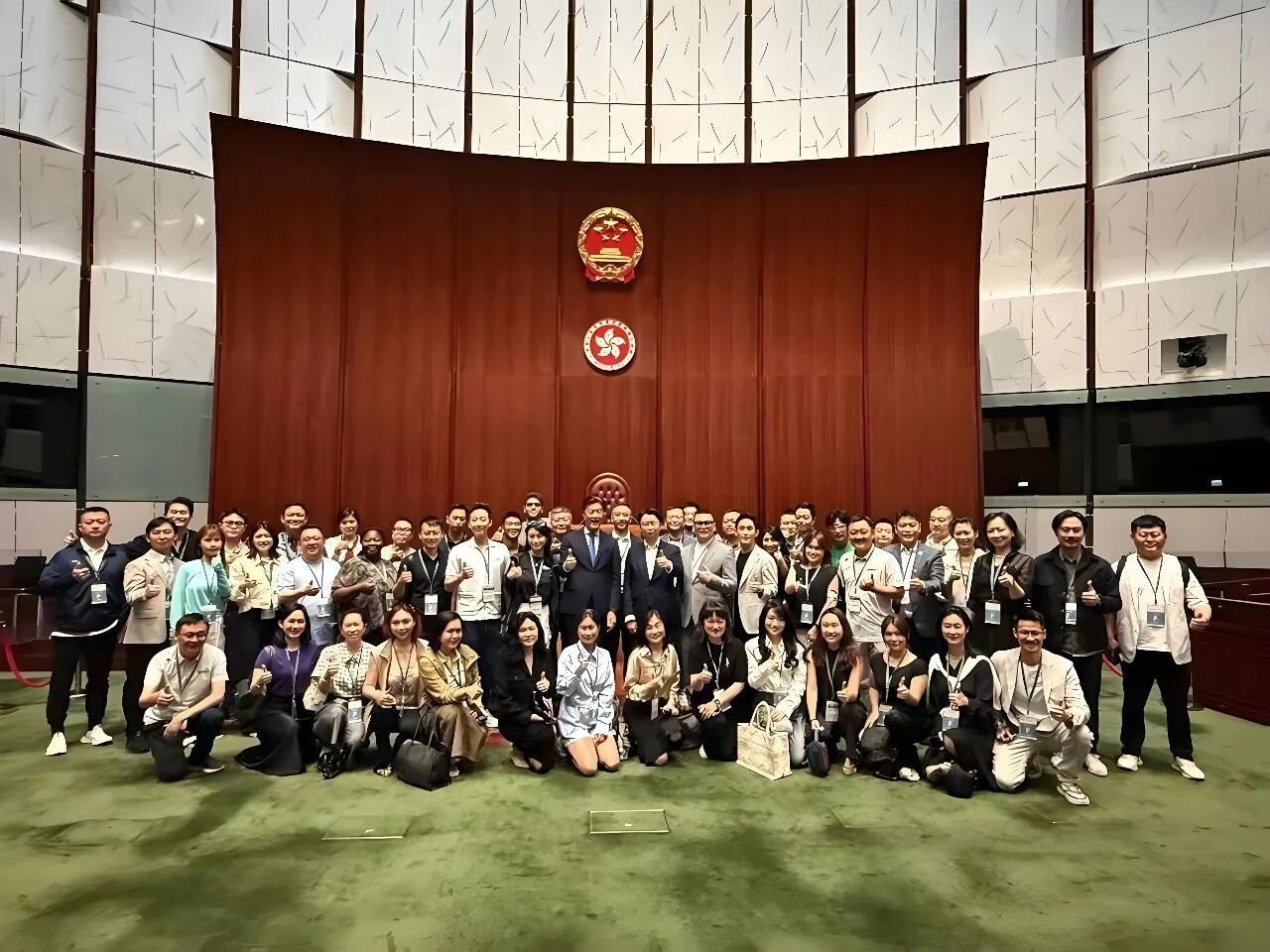
BRI EMBA lecturers and students at the Legislative Council Complex
Learning Through Practice: Exploring the Pulse of an International Financial Center
The module began with students stepping beyond the classroom to visit Hong Kong Exchanges and Clearing Limited (HKEX) and a number of representative licensed financial institutions and platforms.
The visits offered a first-hand view of how one of the world’s leading international financial centers is adapting to changes in capital markets, technology, and cross-border investment.
At HKEX: Connecting Mainland China with Global Capital
At HKEX, students visited Connect Hall, the former trading hall that has become one of the most recognizable spaces in Hong Kong’s financial community.
As a major link between Mainland China and international capital markets, HKEX illustrates Hong Kong’s distinctive ability to connect domestic and global pools of capital.
Students and faculty engaged in discussions on topics including reforms to the initial public offering regime, the continued development of the Stock Connect framework, and greater efficiency in cross-border investment and financing.
The visit gave students a more tangible understanding of Hong Kong’s role as a gateway between Mainland China and international financial markets, as well as its position within the broader process of financial opening and market connectivity.
Financial Technology and Cross-Border Wealth Management
During visits to several licensed financial institutions, students also explored the theme of “New Trends in Fintech and Cross-Border Wealth Management.”
Experienced industry practitioners shared examples of how financial technology is being used to improve the efficiency of cross-border services, enhance client experience, and support businesses and the wider real economy.
Discussions also addressed how financial institutions can pursue innovation while operating within increasingly sophisticated compliance and regulatory frameworks.
Students exchanged views with practitioners on issues including international business models, risk-management systems, regulatory technology, and the future of cross-border financial services.
The combination of emerging trends and practical experience gave students a closer look at the forces reshaping financial services across markets.
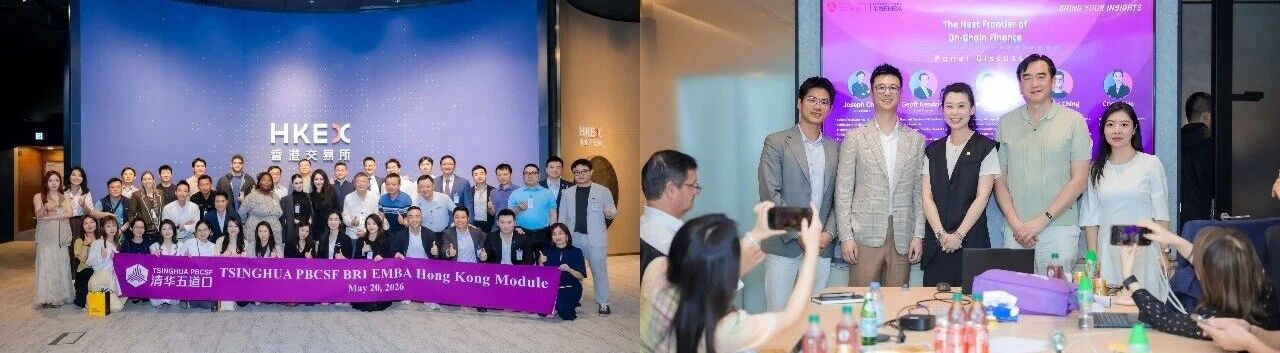
BRI EMBA students visiting HKEX and participating in discussions
Connected by Tsinghua PBCSF: Strengthening Alumni Ties in Hong Kong
Beyond the formal academic program, a series of alumni and cultural activities brought together members of the broader Tsinghua PBCSF community.
Tsinghua PBCSF Connections in Hong Kong: Alumni Sharing Session
At the Tsinghua PBCSF Connections in Hong Kong Alumni Sharing Session, BRI EMBA alumni, representatives of the Hong Kong alumni community, and current students gathered to exchange experiences and perspectives.
BRI EMBA alumnus Lin Yanjun (Sam), among others, shared lessons from his entrepreneurial and professional experience in Hong Kong, offering perspectives and advice to current students.
Helen Wu and Chu Chun Kit from BRI EMBA Cohort 7, together with He Zhiying (Crystal) from Cohort 6, also delivered thematic presentations.
Their discussions covered topics ranging from global asset allocation to cross-border industrial collaboration, reflecting the international experience, professional expertise, and entrepreneurial outlook of the Tsinghua PBCSF community.
The session was both a platform for knowledge exchange and an opportunity to strengthen relationships across different BRI EMBA cohorts and generations of alumni.
Art and Perspective: An Afternoon at M+
The program also took students to M+, Asia’s global museum of contemporary visual culture in Hong Kong’s West Kowloon Cultural District.
Moving from minimalist works and conceptual art to multimedia and audiovisual installations, students encountered new ways of thinking about creativity, culture, and contemporary society.
The museum visit offered a different kind of learning experience—one in which artistic expression and interdisciplinary perspectives created space for reflection and conversation beyond the conventional business classroom.
A Morning on Victoria Peak
Early one morning, students joined alumni from the Finance EMBA Hong Kong Alumni Association for a hike on Victoria Peak.
With morning views across Victoria Harbour and the Hong Kong skyline, the activity offered students an opportunity to experience another side of the city while reconnecting with Tsinghua’s long-standing emphasis on physical activity and community.
Continuing the tradition embodied in the phrase “No Sports, No Tsinghua,” the hike brought students and alumni together through exercise, conversation, and shared experience.
Victoria Harbour Night Cruise: Legacy and Vision
As evening fell, students boarded a cruise for a “Legacy and Vision” night on Victoria Harbour.
Against Hong Kong’s illuminated skyline, students reflected on the module, exchanged ideas, and looked ahead to future opportunities.
The evening offered a fitting conclusion to a week that combined intensive study with professional exchange and community building—and added a memorable final chapter to the BRI EMBA experience in Hong Kong.
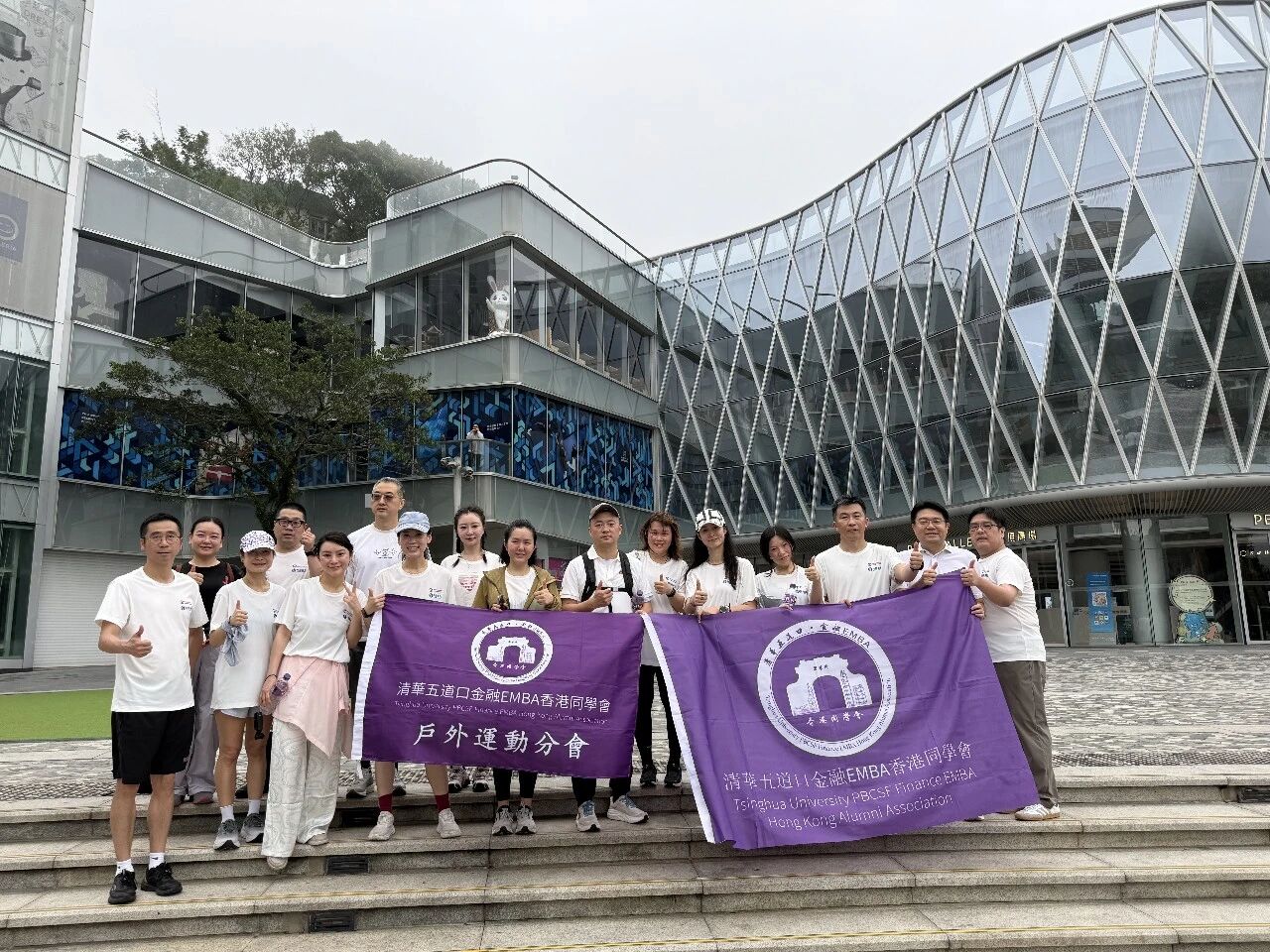
BRI EMBA students and members of the Hong Kong alumni community during the Victoria Peak hike
Advancing Financial Leadership Education for a New Era
The five-day Hong Kong module brought together multiple dimensions of executive learning: the legal foundations of finance, international relations and geopolitics, institutional and corporate visits, government-business dialogue, and cultural engagement.
For students, the experience offered not only a broader international perspective and deeper professional knowledge, but also a closer understanding of Hong Kong’s distinctive position at the intersection of Mainland China and global markets.
It also provided an opportunity to reflect on the responsibilities facing entrepreneurs and business leaders operating in an increasingly interconnected—and increasingly complex—global economy.
As one of China’s first financial EMBA programs focused specifically on the Belt and Road Initiative, the Tsinghua PBCSF BRI EMBA is committed to developing business and financial leaders who can operate effectively across markets, industries, and cultures.
The program continues to expand its approach to global executive education, strengthen its international industry and alumni networks, and cultivate leaders who combine professional expertise, international perspective, strategic thinking, and a strong sense of public purpose.
Looking ahead, the Tsinghua PBCSF BRI EMBA will continue to strengthen the quality of its academic curriculum, broaden its international learning platform, and create deeper connections between classroom knowledge and real-world practice.
Through an increasingly global and diverse learning experience, the program seeks to equip students with the insight, networks, and capabilities needed to navigate international markets and contribute to the next chapter of cross-border economic and business cooperation.


